
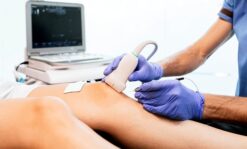
Varicose vein Ultrasound
Introduction
Varicose vein ultrasound (venous duplex scan) is a comprehensive assessment of your leg’s venous system, essential before any varicose vein treatment. This specialized scan maps your superficial and deep veins, identifies reflux (backward blood flow), locates incompetent valves, and assesses the great and small saphenous veins.
It’s the gold standard investigation before modern treatments like endovenous laser ablation (EVLA), radiofrequency ablation, or sclerotherapy. Our vascular imaging specialists create detailed vein maps to guide treatment planning.
The scan is also useful for monitoring existing varicose veins or investigating symptoms like leg heaviness, aching, or swelling. We serve patients throughout Essex seeking private varicose vein assessment and treatment planning.
Comprehensive Venous Mapping:
- Great saphenous vein (GSV) – full length from groin to ankle
- Small saphenous vein (SSV) – back of calf
- Sapheno-femoral junction (SFJ) – where GSV meets deep system
- Sapheno-popliteal junction (SPJ) – where SSV meets deep system
- Perforator veins – connect superficial to deep system
- Deep veins – femoral, popliteal (patency check)
- Tributary veins – varicose branches
- Valve competence testing at multiple levels
- Reflux measurement (duration and severity)
- Vein diameter measurements
What We Assess:
- Which veins are varicose
- Source of reflux (where valves fail)
- Deep vein patency (must be functioning)
- Extent and pattern of varicose veins
- Suitability for different treatments
- Risk factors for recurrence
Symptoms of Varicose Veins:
- Visible twisted, bulging veins
- Leg heaviness or aching (worse by evening)
- Swelling in lower legs and ankles
- Throbbing or burning sensation
- Muscle cramps (especially at night)
- Itching around affected veins
- Restless legs
- Skin discoloration (brown staining)
- Leg ulcers (severe cases)
- Symptoms worse after standing
Why Scan Before Treatment:
Essential Information:
- Determines if treatment is needed
- Identifies which veins need treating
- Rules out deep vein problems (contraindication)
- Guides treatment selection (laser vs foam vs surgery)
- Predicts treatment success rates
- Baseline for follow-up after treatment
Treatment Options Guided by Scan:
- Endovenous laser ablation (EVLA)
- Radiofrequency ablation (RFA)
- Foam sclerotherapy
- Surgical stripping (if needed)
- Conservative management (compression)
- Combination approaches
The Scanning Process:
- Performed standing or lying down
- Legs scanned from groin to ankle
- Valsalva manoeuvres (gentle straining) to test valves
- Calf compression tests
- Both legs examined
- Takes 30-45 minutes
- Detailed vein map created
- Photograph documentation
What Makes Veins Incompetent:
- Valve failure (most common cause)
- Pregnancy hormones and pressure
- Prolonged standing occupations
- Genetics (family history)
- Age-related changes
- Previous DVT (deep vein thrombosis)
- Obesity
Detailed Report Includes:
- Diagram of venous anatomy
- Sites and severity of reflux
- Vein diameters at key points
- Deep vein assessment
- Treatment recommendations
- Suitability for different procedures
Who Needs This Scan:
- Anyone considering varicose vein treatment
- Symptomatic varicose veins affecting quality of life
- Skin changes or ulceration
- Previous vein treatment (recurrence check)
- Family history wanting early assessment
Next Steps After Scan:
- Immediate results discussion
- Detailed report with vein map
- Treatment options explained
- Referral to vein specialist (if needed)
- Treatment planning
No Special Preparation:
- No fasting required
- Wear shorts or loose trousers
- Shower before appointment